Before and After Hair Transplant: What Results Are Actually Realistic?
What a hair transplant looks like at 1, 3, 6, 9 and 12 months, what a realistic final result is, and how to spot misleading before and after photos.
Published Updated Reviewed by the Hair in Mexico medical team
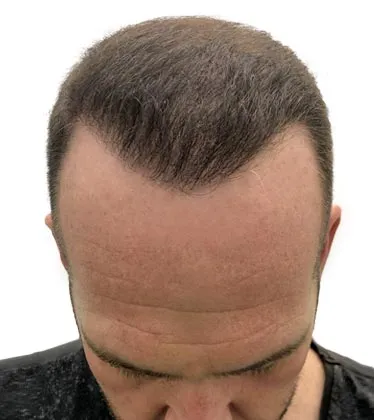
Before and after photos often sway a hair transplant decision more than anything else. They create hope and expectations, and sometimes disappointment. A hair transplant can clearly improve how you look, so the more useful question is what kind of before and after result is realistic for you. This guide explains how to read hair transplant results honestly, without the marketing gloss.
The short answer: what to expect, month by month
| When | What you usually see |
|---|---|
| First 2 weeks | Small scabs and redness in the treated area, which fade within 10 to 14 days |
| Weeks 2 to 8 | Most transplanted hairs shed. This is normal: the follicles stay in place |
| Months 3 to 4 | New hair starts to grow, often thin and uneven at first |
| Month 6 | A clear change for most patients, still filling in |
| Months 9 to 12 | Close to the final look, with thicker and longer hair |
| Month 12 and later | The final result. The crown can keep improving for a few more months |
A realistic final result is a natural hairline and a clear gain in coverage, not the density you had at 18. How full it looks depends on how many grafts your donor area can give and how much area needs hair. The team at Hair in Mexico follows each patient’s growth for a full year with monthly photos. You can see patients’ photos on our results page.
Why before and after photos matter so much in hair transplant decisions
Hair loss is visual, so it makes sense that people look for visual proof. Photos help you picture what might change, and for many people they become a shortcut for deciding whether to trust a clinic.
The trouble is what a photo can’t tell you. It won’t show whether the result holds up over the long term, how your hair loss will progress, what state the donor area was left in, or what maintenance the patient needs. Photos are persuasive, but they only tell part of the story.
What before and after hair transplant photos really show (and what they don’t)
Most before and after photos show a restored hairline, more visual density and a face that looks better framed. What they often leave out matters just as much:
- How many grafts were used
- Whether the density will hold long-term
- Differences in lighting, styling or hair length between the two shots
- How the result looks under harsh, everyday light
A photo captures one moment. A hair transplant has to work for decades.
Why some hair transplant results look too good to be true
When a result looks unrealistically perfect, there is usually a reason. The photo may have been taken at peak growth, with flattering lighting and angles, and the hair styled to cover as much as possible. Some clinics show only their best-case patients, and some use aggressive hairline designs because they photograph well.
In those cases visual impact has been put ahead of long-term realism. A hairline that looks impressive at 12 months may not look natural when you are 40 or 50.
What realistic hair transplant results actually look like
Realistic results tend to be more subtle than promotional images. You can expect a natural hairline that suits your age, a moderate but visible gain in density, and new hair that blends in with the hair you already have. Ideally, nothing about it draws attention.
A successful transplant often goes unnoticed. People may tell you that you look better without ever guessing you had a transplant.
How long after a hair transplant do results look truly final?
This is one of the most misunderstood parts of the process. The typical timeline looks like this:
- 0-3 months: shedding and early recovery
- 4-6 months: visible but immature growth
- 9-12 months: strong, mature appearance
- Up to 15 months: subtle refinement continues
Photos taken too early can mislead in either direction, raising expectations or underselling the final result. Give it time. For a closer look at each stage, see our week-by-week hair transplant recovery timeline.
Hairline design vs density: which one defines a good result?
Many patients focus on density, while experienced surgeons focus on design. A well-designed hairline gives an impression of density with fewer grafts, and it ages naturally along with you. Packing in density with a poor design tends to look artificial.
The most natural results come from the placement and angle of each graft, not from sheer graft numbers.
Why hair transplant results vary so much between patients
No two hair transplants are identical. Results depend on the thickness and texture of your donor hair, your skin type and how you heal, and how far your hair loss has progressed. Surgical planning and execution play a part, and so does any hair loss that continues after the procedure.
That is why comparing your likely result to someone else’s photo is rarely accurate.
Common misconceptions about before and after hair transplant photos
A few misunderstandings come up again and again. Some people assume a transplant stops hair loss for good, or expect the same density whatever the quality of their donor area. Others believe one surgery fits every case, or forget about long-term maintenance altogether.
Before and after photos should inform your expectations. They are not a guarantee. If you want to understand what lasts and what doesn’t, read how long a hair transplant lasts.
Final reality check: what should you expect from a hair transplant?
Expect a clear improvement rather than perfection, and a natural look rather than a dramatic one. The result will also change and age with you over the years.
A good hair transplant improves your appearance without becoming the first thing people notice about you. For the bigger picture, see does a hair transplant really work.
How to evaluate before and after results like an informed patient
When you look through results, a few habits help:
- Look for consistency across several cases, not one standout
- Focus on patients whose hair loss pattern resembles yours
- Ask how long after surgery each photo was taken
- Check how natural the hairline looks, as well as how dense it is
You can review real cases on our results page, and read how we approach hair transplants for men and for women.
If you’d like an honest opinion on what is realistic for your own hair, book a free consultation with our medical team.