What makes an eyebrow transplant different from a hair transplant?
An eyebrow transplant uses the same idea as a scalp transplant, moving your own permanent follicles to where hair is missing, but the precision is much finer. Eyebrows are small, highly visible and sit on the most expressive part of the face. A few hairs at the wrong angle are noticeable in a way they would not be on the scalp.
Three things set the eyebrow procedure apart:
- Single-hair grafts. Scalp follicles often grow in groups of two to four hairs. For brows, only grafts with one hair are used, because natural brows grow as single hairs.
- Far fewer grafts. An eyebrow needs a small fraction of the grafts used for a scalp, so the donor area is barely affected.
- Strict angle control. Brow hair lies very close to the skin and changes direction along the brow.
How are angle and direction planned?
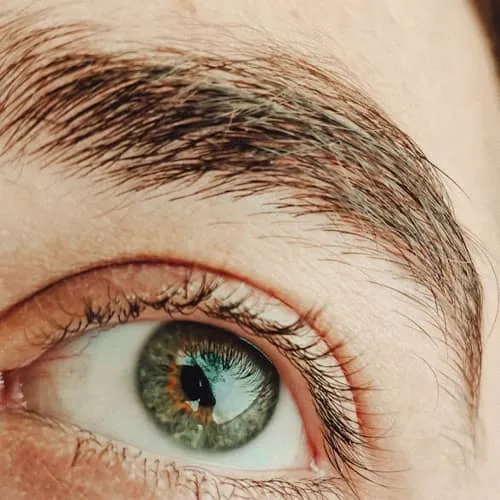
Eyebrow hairs follow a pattern that changes across the brow, and copying it is what makes a transplant look natural:
- The head (inner brow): hairs point mostly upward and slightly outward.
- The body: hairs above and below converge, lying almost flat and pointing toward the tail.
- The tail: hairs lie flat and point outward and slightly down.
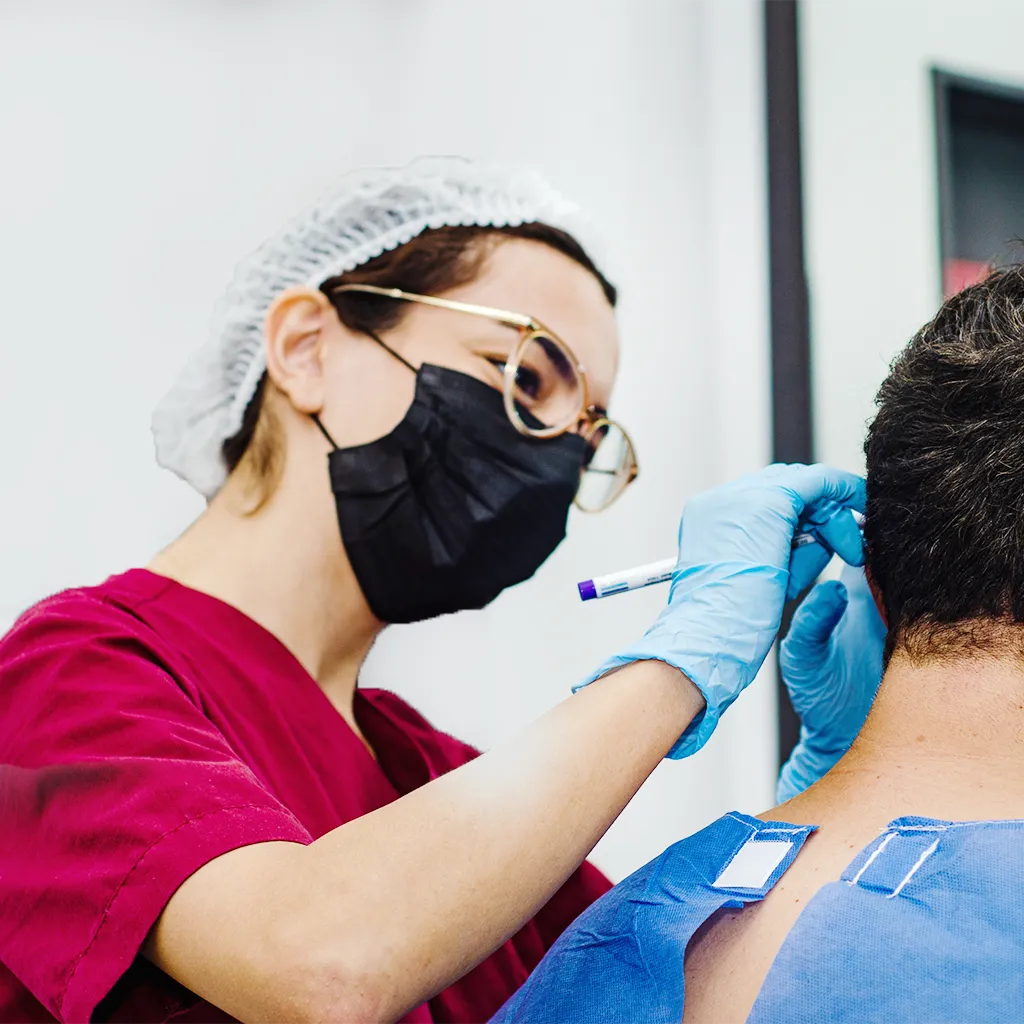
Before the procedure, the brow shape is drawn on your face and adjusted with you while you look in the mirror and move your face. Each graft is then placed at a very shallow angle, following the direction mapped for that part of the brow. This is the same skill that matters in beard transplants, where hair also grows close to the skin.
Why do transplanted eyebrows need trimming?
Transplanted eyebrows need trimming because the hair keeps the behaviour of the place it came from. Scalp hair has a long growth phase and keeps growing; natural eyebrow hair stops at a short length. Once the new brows grow in, they will keep getting longer unless you trim them.
Most people find this easy to manage with small scissors and a brow comb, much like trimming a beard. Some also use brow gel, because scalp hair can be straighter or curlier than original brow hair. The team chooses donor hairs that are as fine as possible to reduce the difference.
How does an eyebrow transplant compare with microblading?
An eyebrow transplant and microblading are different treatments with different outcomes:
| Eyebrow transplant | Microblading | |
|---|---|---|
| What it adds | Real, growing hairs | Pigment strokes in the skin |
| How long it lasts | Long-lasting, because the follicles are permanent | Fades over time and needs touch-ups |
| Upkeep | Regular trimming | Periodic touch-up appointments |
| Texture | Real hair with volume | Flat, drawn effect |
Microblading can suit people who want a quick change or have no donor hair. A transplant suits people who want real hair that grows.
What happens on procedure day and afterwards?
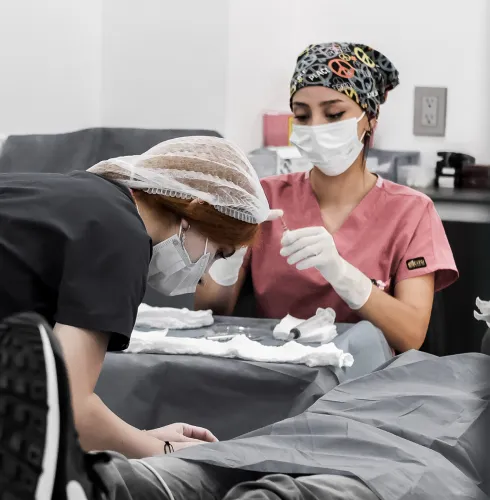
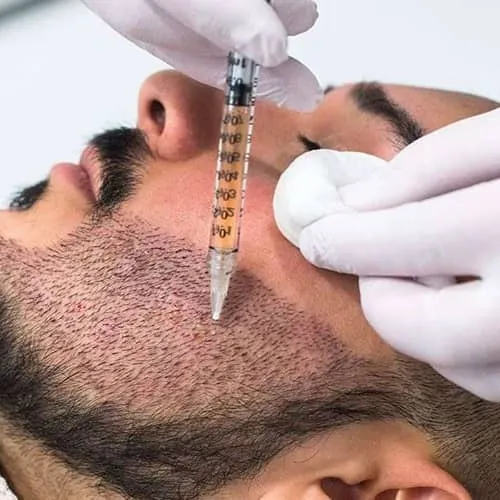
Procedure day at the clinic in Cancun starts with your brow design confirmed in person. The donor area, usually a small zone at the back of the scalp, is trimmed, and both areas are numbed with local anaesthesia. Most patients describe pressure rather than pain. Single-hair follicles are extracted, sorted and implanted one by one with FUE or DHI.
Recovery is usually short:
- First week: small crusts form around each graft. Keep the brows dry and do not rub or pick them.
- Weeks 2 to 6: most transplanted hairs shed. This is normal.
- Months 3 to 4: new hairs start to grow.
- Around 9 to 12 months: the brows look close to final, and regular trimming begins.
You leave with medication and written instructions, and our team follows your progress on WhatsApp. If you are also thinking about thinning on the scalp, read about our hair transplant for women, or see our FAQ for travel and booking questions.