How is a male hairline planned?
A male hairline is planned around three things: your age, your stage of hair loss and the number of grafts your donor area can give. Specialists often describe male-pattern hair loss with the Norwood scale, which runs from a slightly receding hairline (early stages) to a bald top with a horseshoe of hair at the sides and back (advanced stages).
The stage shapes the plan:
- Early recession at the temples: a refined hairline and temple points, often with a modest number of grafts.
- Receding front and thinning mid-scalp: a new hairline plus density behind it, so the front does not look like a thin fringe.
- Advanced loss including the crown: the front is usually prioritised, because the donor supply is finite and the crown needs many grafts to look full.
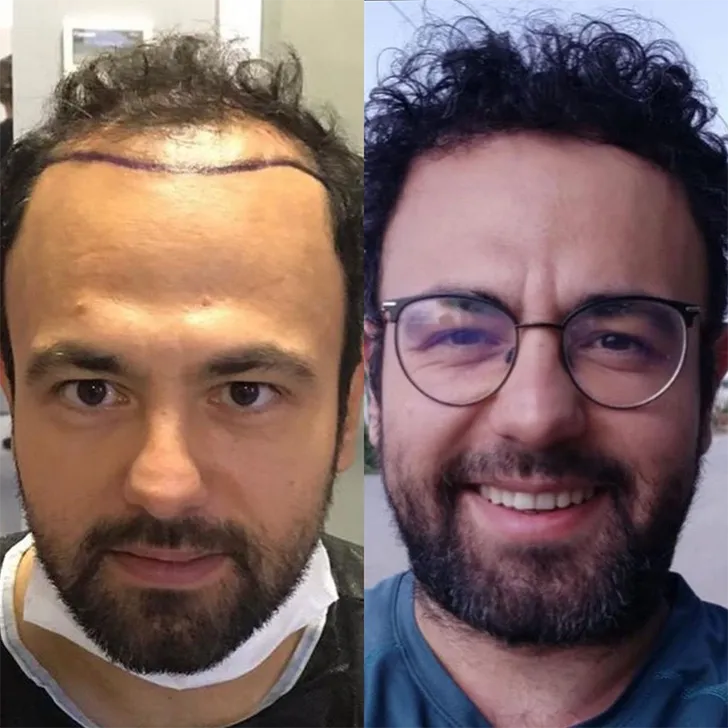
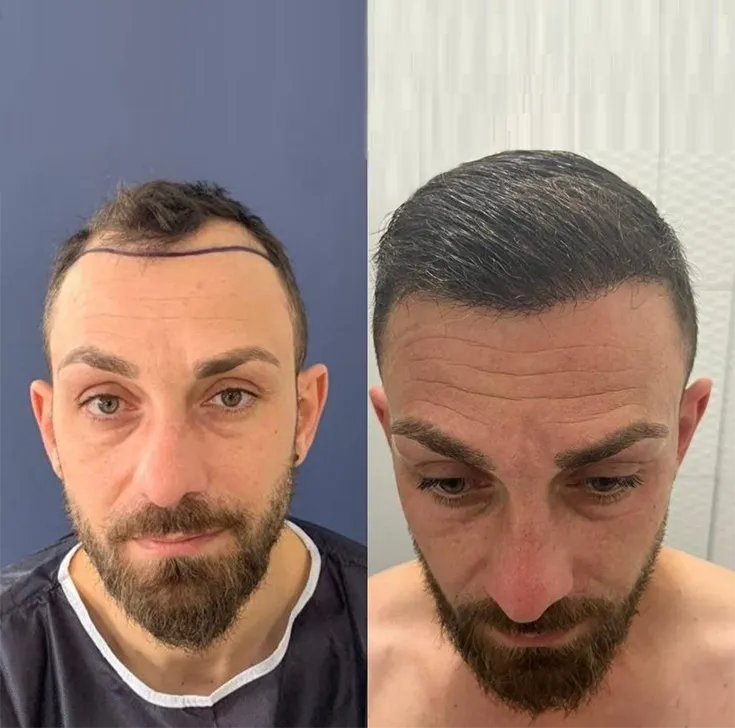
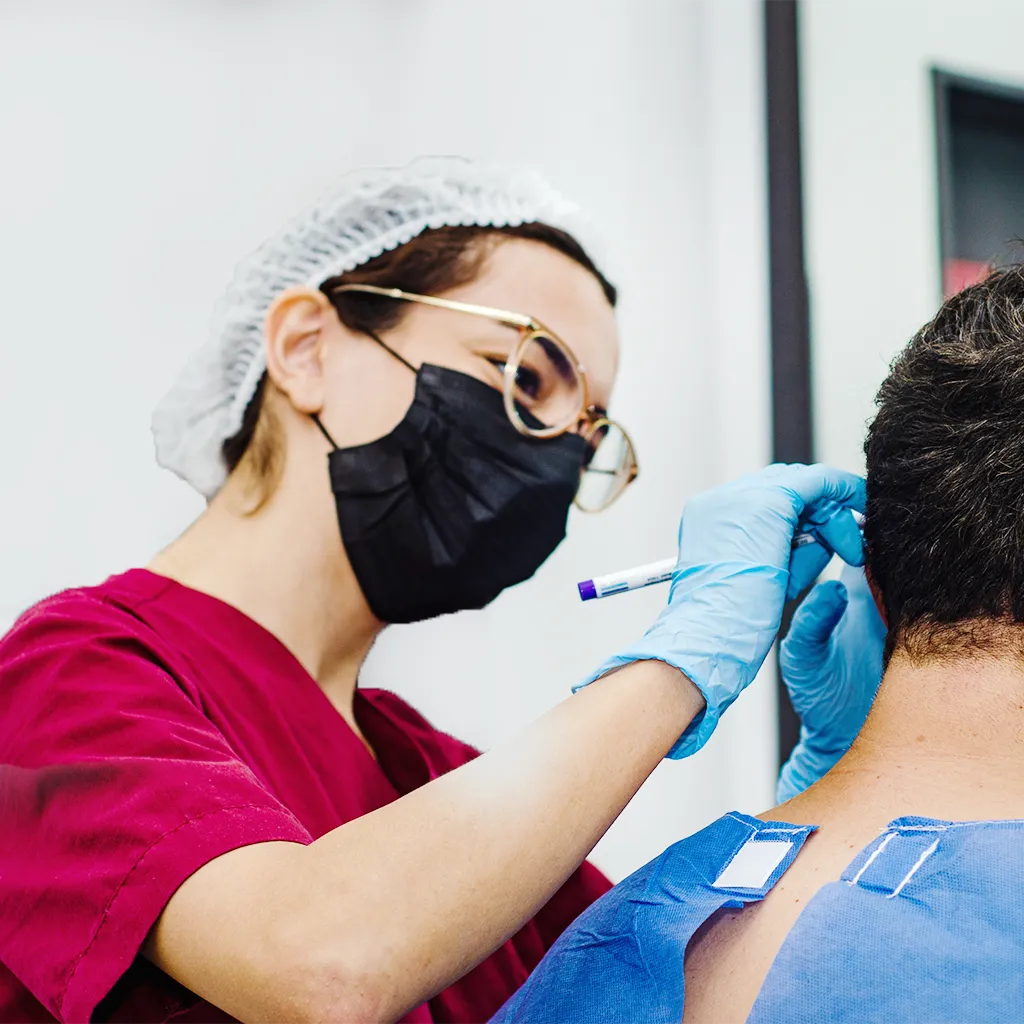
A natural male hairline is never a straight ruler line. It has slight irregularity, softer single hairs at the very front and a gentle recession at the temples. Our team draws it on your scalp and agrees it with you before the procedure starts.
Why does your age change the design?
Younger men usually get a more conservative plan. Hair loss in your twenties and early thirties may still be progressing, so a low, dense hairline can look unnatural later if the hair behind it keeps thinning. A hairline that suits you at 50 is the safer goal. Our guide on the best age for a hair transplant explains this in more detail.
Older men with stable hair loss are often easier to plan for, because the pattern is already visible and the team can see exactly where grafts will matter most.
What happens on procedure day in Cancun?
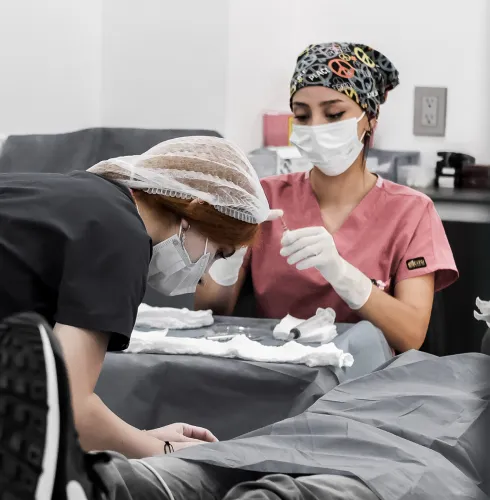
Procedure day starts at the clinic after your hotel pickup. The steps follow the same order for most male patients:
- Consultation and design: the plan from your photo assessment is confirmed in person, and your hairline is drawn.
- Preparation: the scalp is shaved short and cleaned.
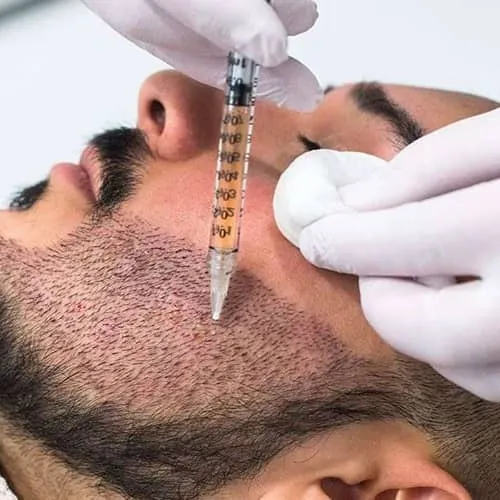
- Local anaesthesia: the donor and recipient areas are numbed. Most patients describe pressure rather than pain from this point on.
- Extraction: follicles are removed one by one from the back and sides of your head.
- Implantation: grafts are placed with FUE (channels opened first) or DHI (a pen-like implanter that opens the channel and places the graft in one step). Our article on FUE vs DHI compares the two.
You return to your hotel the same day with your medication and written instructions, and the clinic sees you again before you fly home.
How does recovery look for men?
Recovery after a male hair transplant is mostly about protecting the grafts in the first days. Small crusts form around each graft and usually fall off within about two weeks with careful washing. The donor area can feel tight or tender for a few days.
Most men go back to office work within a few days. Strenuous exercise, swimming and direct sun on the scalp should wait until your instructions say otherwise.
When will you see the final result?
Results from a male hair transplant develop slowly, and the timeline surprises many men:
- Weeks 2 to 6: most transplanted hairs shed. This is normal; the follicle stays in place.
- Months 3 to 4: new hairs start to appear, often fine at first.
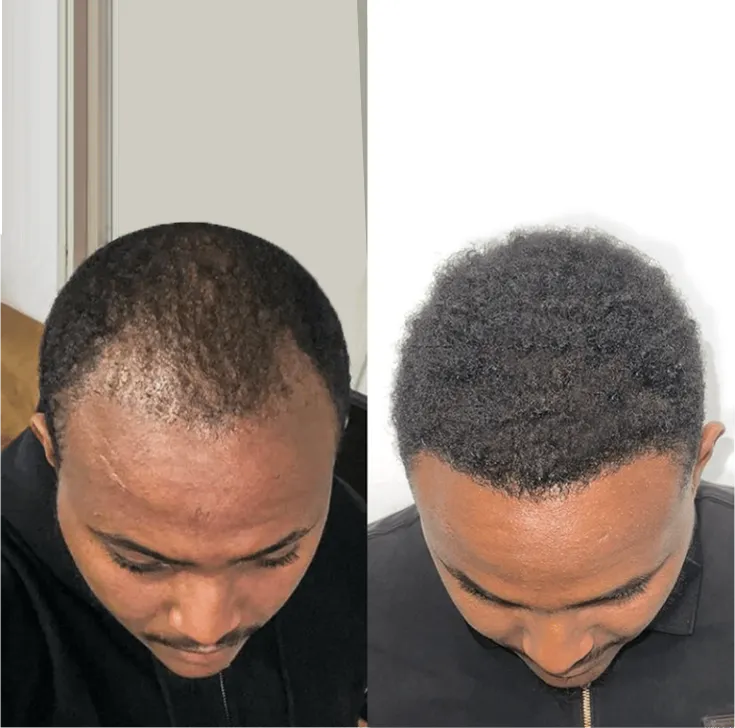
- Months 6 to 9: density builds and hair thickens. The hairline starts to look like yours.
- Around 12 months: the result is close to final. The crown can take longer than the front.
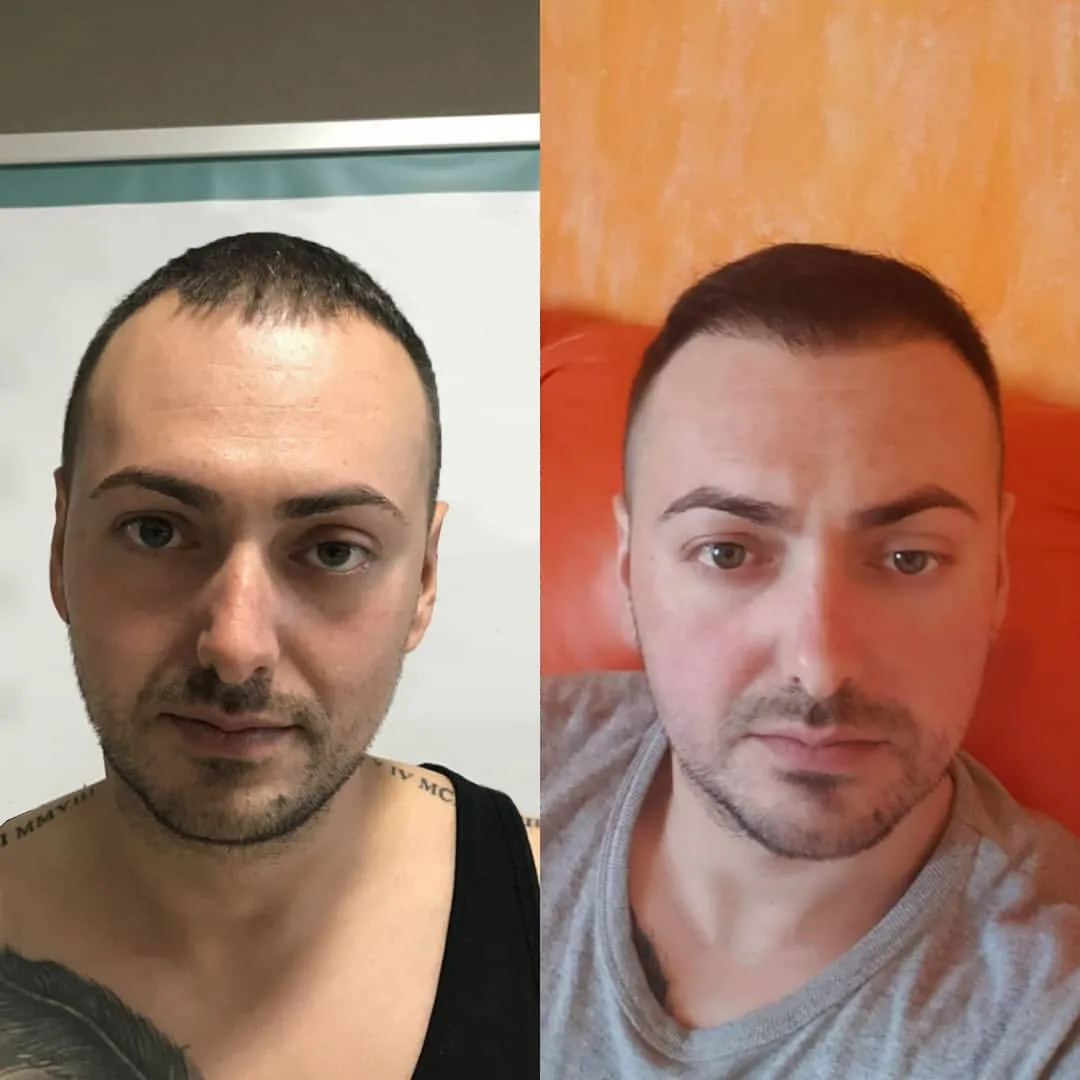
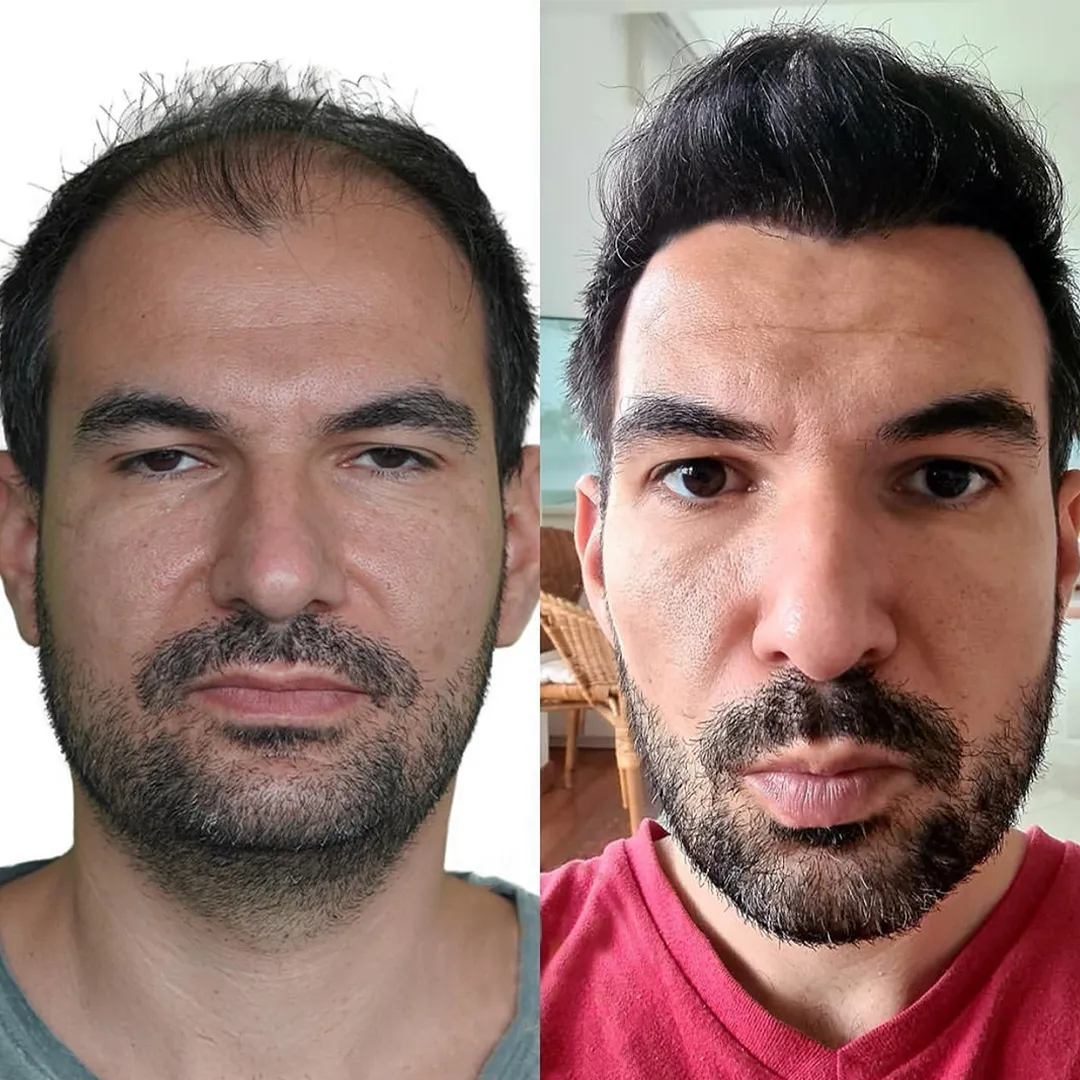
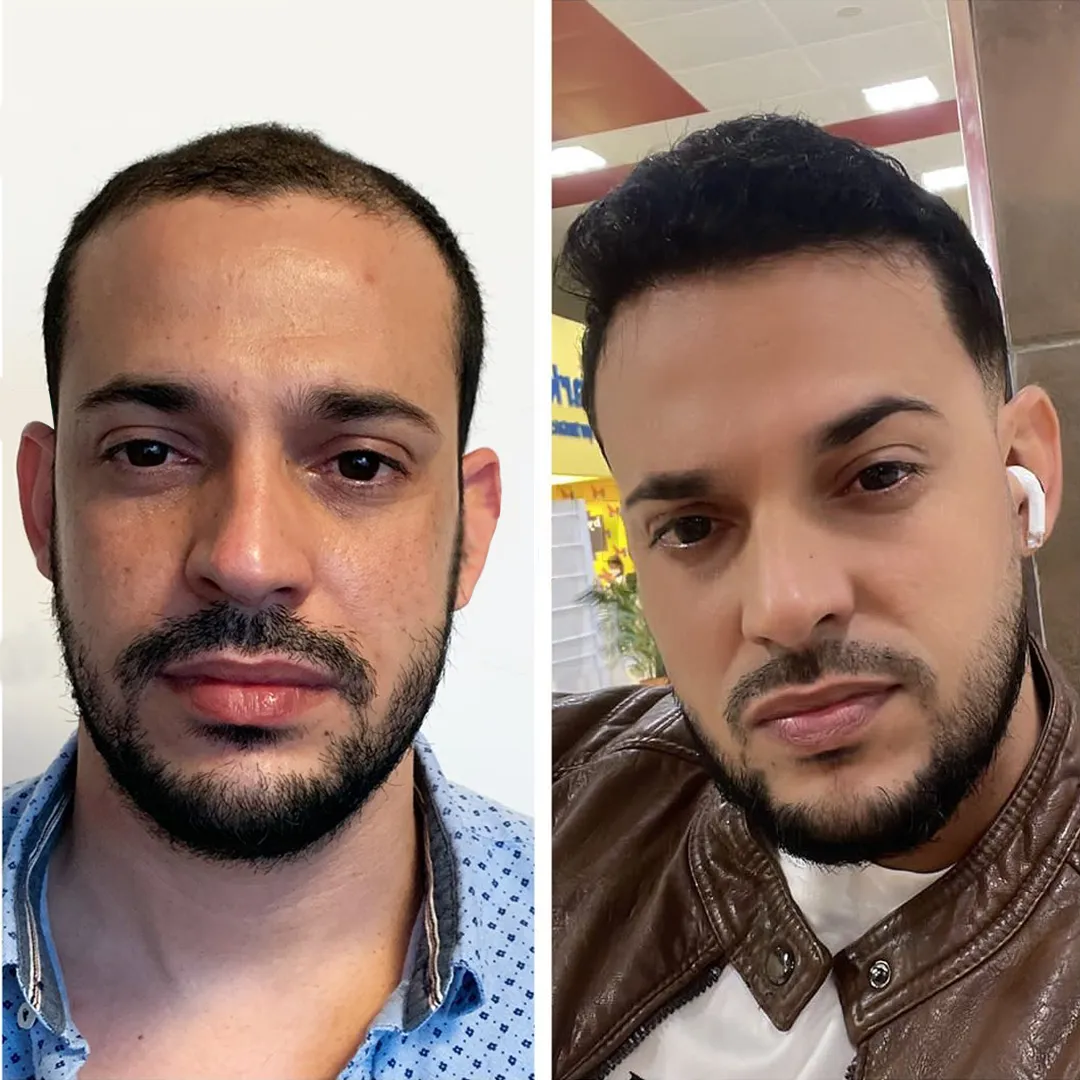
Our team follows your growth on WhatsApp throughout. You can see more men’s cases, photographed before and after, on the results page.