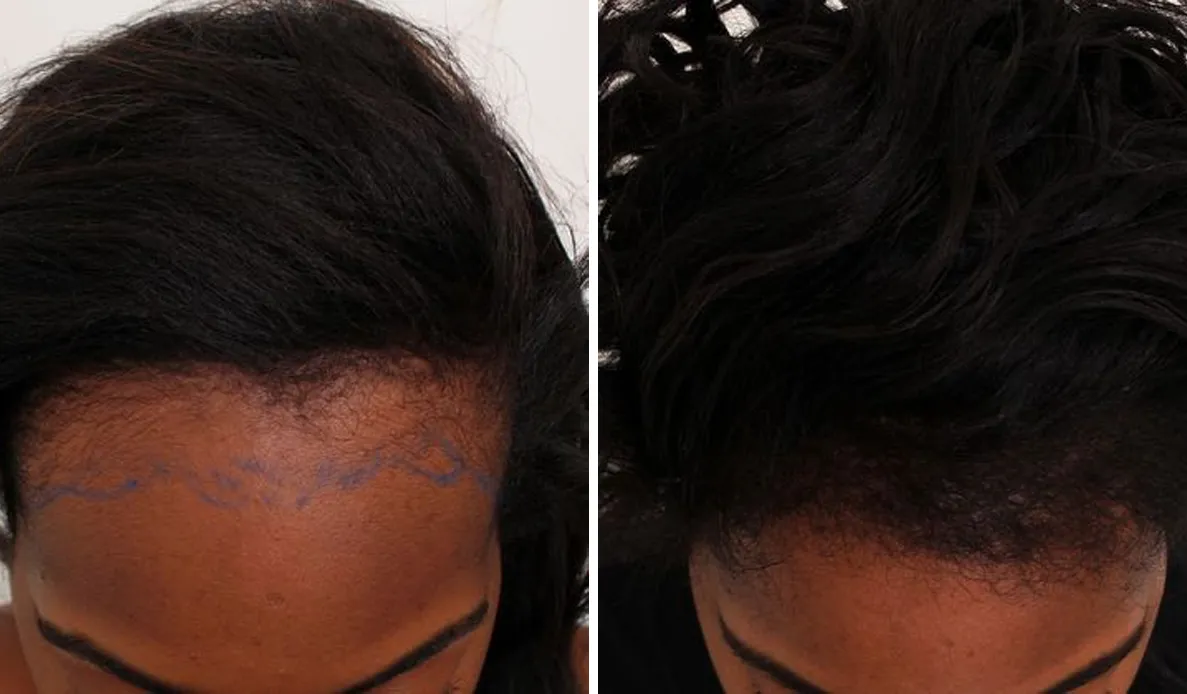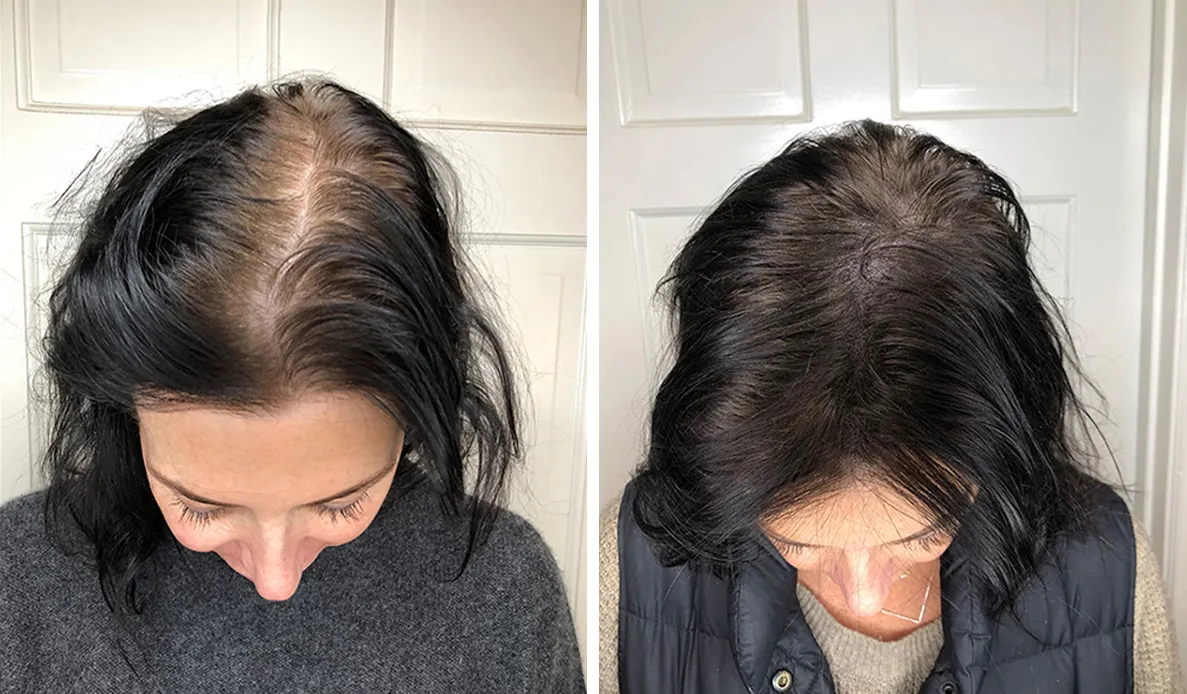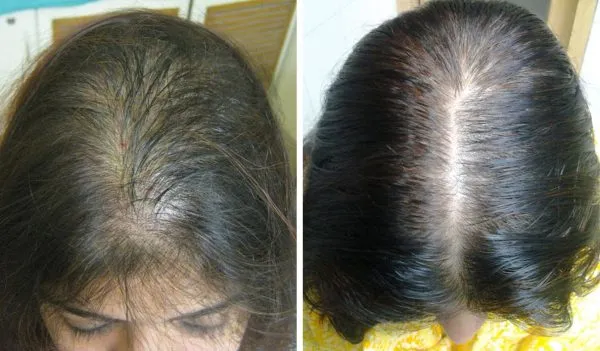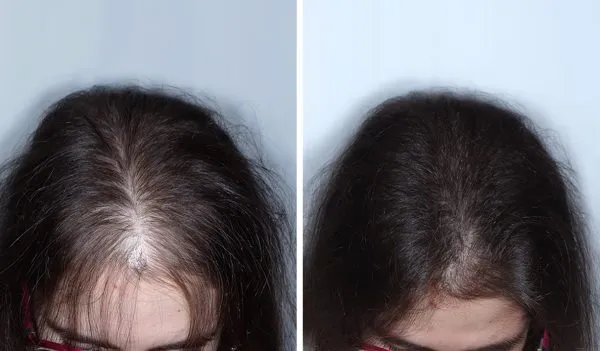
Why is female hair loss assessed differently?
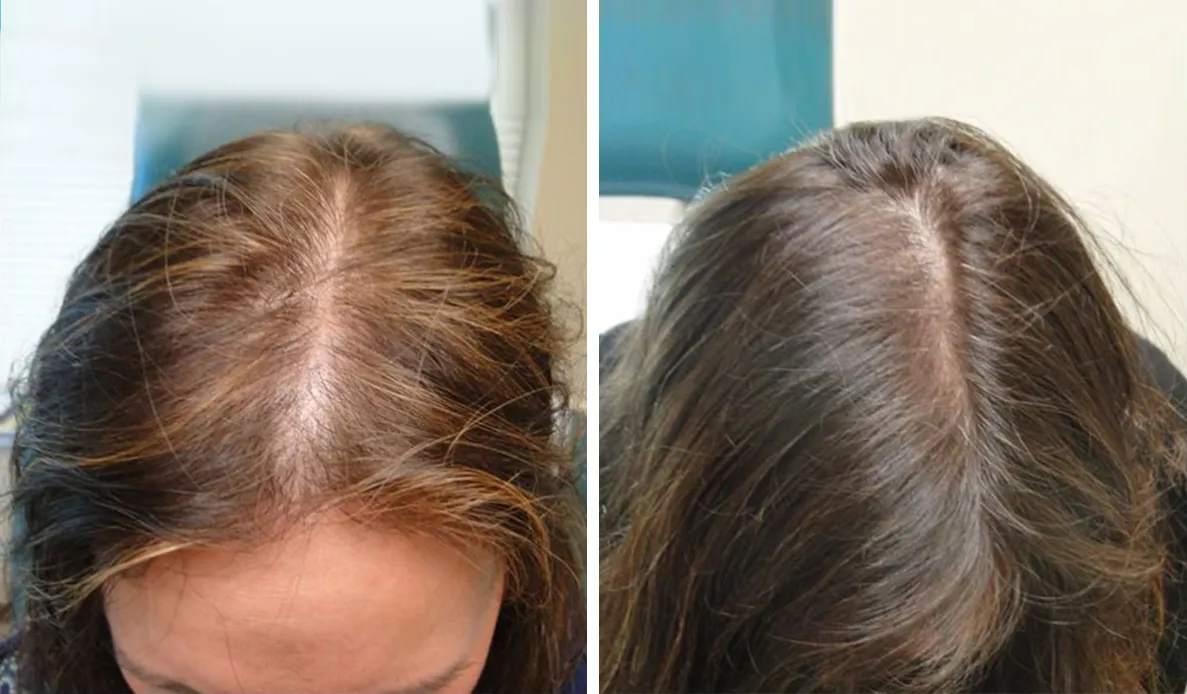
Female hair loss is assessed differently because it is usually diffuse and often has a cause that can be treated without surgery. Men tend to lose hair in a predictable pattern from the temples and crown. Women more often see a widening part, a thinner ponytail or overall loss of volume, while the hairline stays in place.
That difference matters for a transplant. Grafts come from the donor area at the back of the head. If that area is thinning too, moving hair from it can make it thinner without giving a lasting gain on top.
Which medical causes should be ruled out first?
Several common medical conditions cause or worsen hair thinning in women, and they should be checked before you plan a transplant:
- Thyroid problems: both an underactive and an overactive thyroid can cause diffuse shedding.
- Low iron or ferritin: iron deficiency is a frequent and treatable cause of thinning, especially with heavy periods.
- Hormonal changes: polycystic ovary syndrome, menopause and stopping or starting hormonal contraception can all affect hair.
- After pregnancy or illness: sudden shedding a few months after childbirth, surgery, high fever or severe stress is usually temporary.
- Autoimmune or scarring conditions: patchy loss or scalp inflammation needs a dermatologist’s diagnosis first.
If one of these is behind your thinning, treating it may be the right first step. A transplant works best when the cause is known and your hair loss has stabilised. Our article on the best age for a hair transplant covers why stability matters.
What is a minimal-shave hair transplant for women?
A minimal-shave hair transplant keeps most of your hair at its current length. Instead of shaving the whole head, the team may shave only a narrow area at the back for extraction, which your longer hair can cover afterwards. In the recipient area, grafts are placed between existing hairs.
This approach usually suits smaller sessions, such as filling along the part or refining the hairline. Larger sessions may still need more shaving. The team tells you which option fits your case after reviewing your photos. The differences between the two implantation techniques are explained in our guide to FUE vs DHI.
What does procedure day look like?
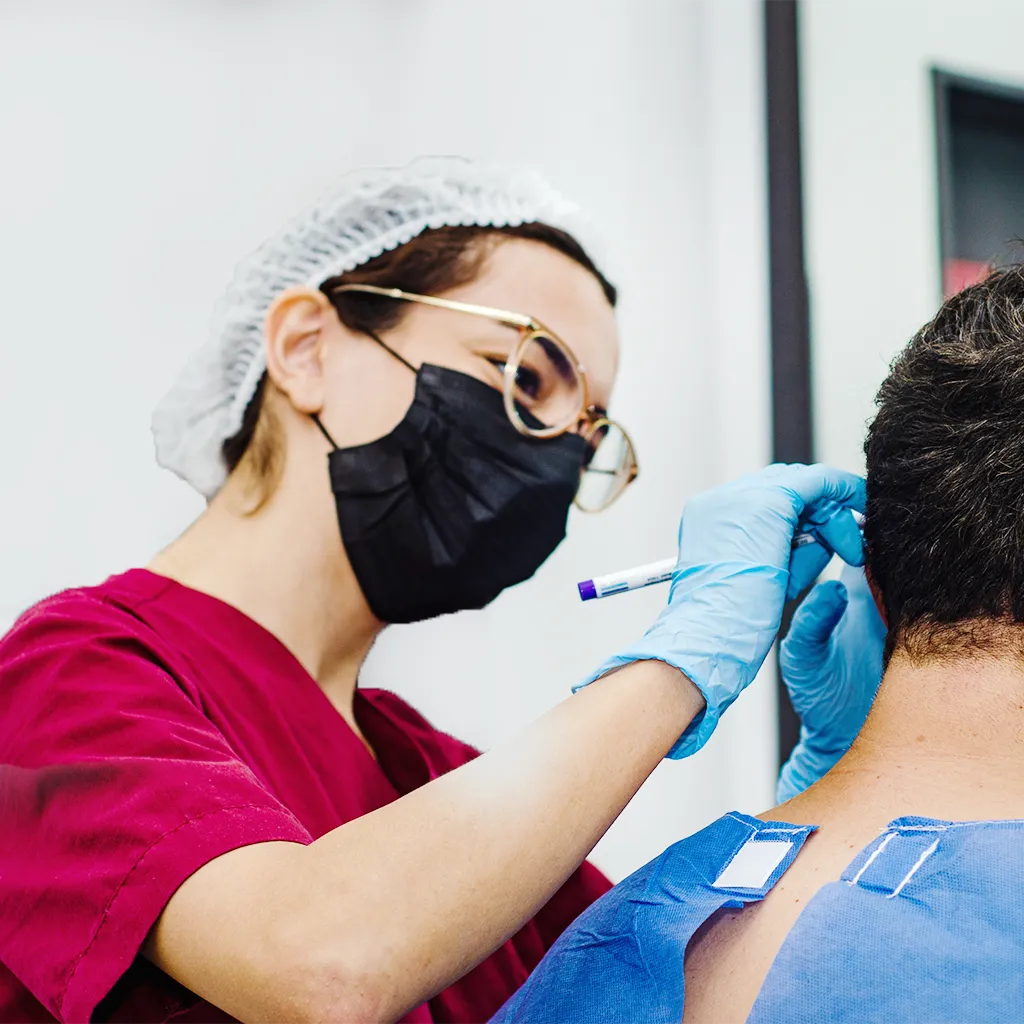
Procedure day at the clinic in Cancun begins with confirming your plan in person. The team marks the areas to treat and, if you are having hairline work, draws the line with you. The procedure is done under local anaesthesia, and most patients describe pressure rather than pain.
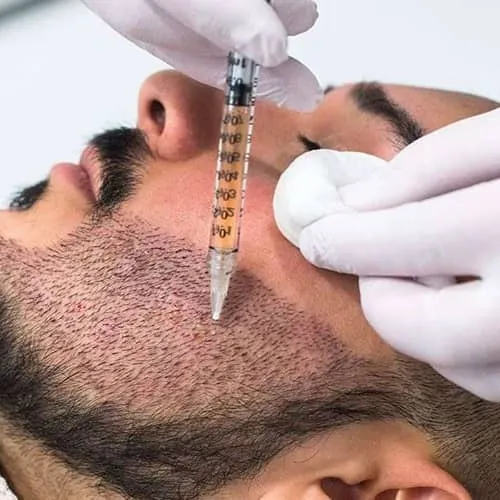
Follicles are extracted one by one from the donor area and implanted with FUE or DHI. You go back to your hotel the same day with medication and written instructions, and the clinic sees you again before you fly home.
How do results develop for women?
Results for women follow the same biology as for men but can be harder to notice at first, because new hair grows among existing hair. A typical timeline:
- First 2 weeks: small crusts form and fall off. With a minimal shave, these are often hidden by your hair.
- Weeks 2 to 8: transplanted hairs shed. Some women also notice temporary shedding of nearby existing hair, which usually grows back.
- Months 3 to 6: new hair starts to grow and the part begins to look narrower.
- Around 12 months: density is close to final.
Our medical team follows your progress on WhatsApp throughout the year. You can see more women’s cases on our results page, or send your photos for a free consultation.