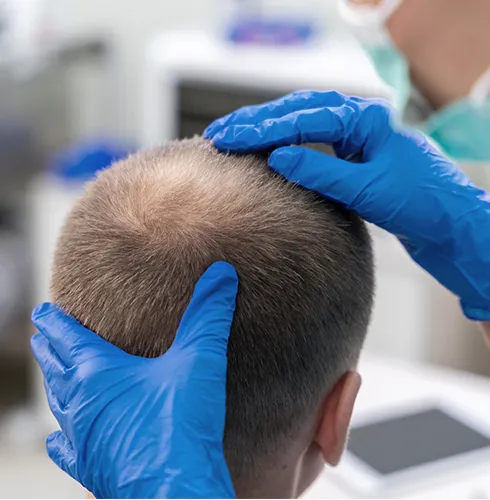
Hair Transplant Myths: What Most Clinics Don't Tell You
Uncover the most common hair transplant myths, what clinics often avoid saying, and how to make informed decisions beyond marketing promises.
Published Updated Reviewed by the Hair in Mexico medical team
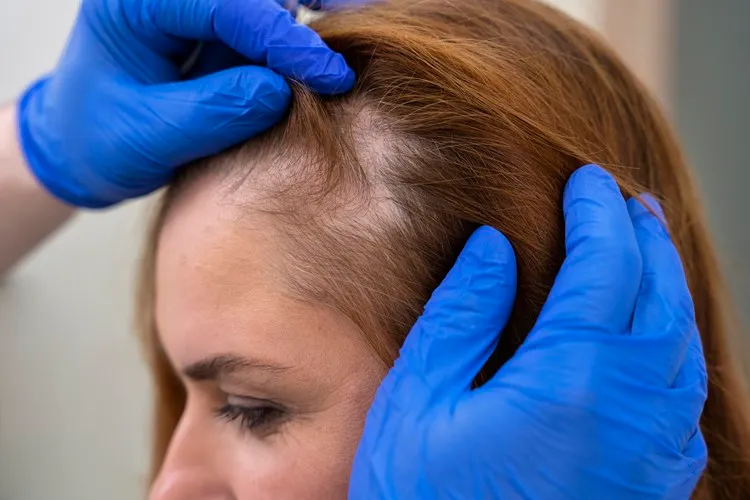
Hair transplant ads promise a lot: instant results, guaranteed density, a “permanent solution” that nobody bothers to explain. With that much noise, it’s not surprising that many patients end up deciding based on myths rather than facts.
This guide slows the conversation down. We want to explain what actually happens, including the parts that are harder to sell.
Why hair transplant myths are so common
Hair loss is emotional, and when emotion meets marketing, myths spread fast. Patients want certainty and clinics want conversions, so complicated medical realities get simplified into something easier to hear. The story that comes out of that sounds comforting, but it rarely thinks beyond the near term.
Myth 1: A hair transplant is a one-time, lifetime solution
This is one of the most damaging misconceptions. A transplant permanently restores the hair that is moved, but it does nothing to stop hair loss in the areas that weren’t treated.
Over time, many patients need medical treatment to support the hair they still have, and some consider a second session years later. Expectations usually shift too. That’s why the best transplants are planned as part of a long-term strategy rather than a one-off fix. We explain this in more detail in how long a hair transplant lasts.
Myth 2: More grafts always mean better results
A high graft number makes an easy selling point, but donor hair is limited. Taking too much from the donor area causes damage that lasts, and density without good design still looks unnatural. In practice, a smaller transplant that has been planned well often looks better than a massive one that hasn’t.
Myth 3: DHI is always better than FUE
A technique is a tool, not a guarantee. Some clinics present DHI as the superior option mainly because it sounds more advanced and lets them charge more. It also gives their marketing something to stand out with.
In truth, both FUE and DHI can produce excellent or poor results depending on how they are used. The planning matters more than the method, and our FUE vs DHI comparison explains when each one makes sense.
Myth 4: Hair transplant results are immediate
Before-and-after photos rarely show how much time passed between the two pictures. Real results take months, not weeks, and it’s normal for hair to shed early on and then grow back unevenly at first.
Anyone promising fast, final results is ignoring biology. Our page on the real results timeline walks through what to expect month by month.
Myth 5: Everyone is a good candidate
Not everyone should have a hair transplant. People whose hair loss is still unstable, patients with a weak donor area and anyone expecting perfection tend to be poor candidates. Ethical clinics turn patients away when that’s the right call. Aggressive clinics don’t.
Myth 6: A natural result depends only on the technique
Patients often ask which technique looks most natural. The honest answer is the one used by someone who knows what they are doing.
A natural result comes from the hairline design, the angle and direction of each graft, conservative planning and the experience of the person doing the work. The technique itself is secondary.
Myth 7: Cheap hair transplants are the same as expensive ones
A lower price doesn’t always mean poor quality. Extremely low prices, though, usually mean something has been cut, whether that’s a high-volume operation, limited medical supervision or aggressive graft extraction.
You may save money upfront and then pay later for corrective work. Our guide to what determines hair transplant cost covers what you are actually paying for.
The truth clinics rarely emphasize
The most important facts are often the least marketable. Hair loss is progressive, and donor hair is finite. Your results will age along with you, and long-term planning matters more than the choice of technique.
None of this fits neatly into an ad, but it’s what decides whether a patient ends up satisfied.
Final advice: how to see through hair transplant marketing
Instead of asking how many grafts you’ll get, try questions like these:
- How will this look in 10 years?
- What happens if my hair loss continues?
- How is my donor area being protected?
A good clinic takes the time to explain. One that only wants to sell usually won’t.
You can see the procedures we offer on our services page. When you’re ready to ask those questions, contact us for a free consultation with our medical team.